
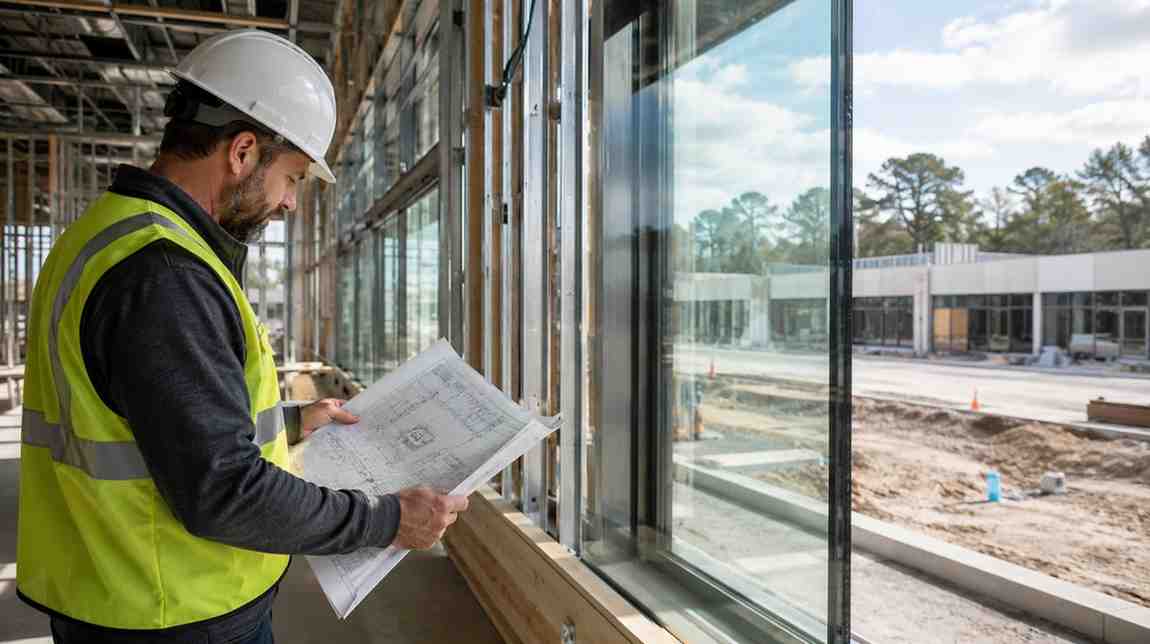
Commercial glass delays usually begin with unclear specs. Wrong glass type, missing cutouts, incomplete dimensions, unclear edgework, or late safety requirements can push a Tennessee build into rework before installation even starts.
For contractors, architects, developers, and project teams comparing commercial glass manufacturers or tempered glass manufacturers in Tennessee, the priority is getting glass that matches the application, dimensions, safety needs, finish requirements, and project timeline before fabrication begins.
This guide breaks down the glass spec mistakes that slow commercial builds and explains how to avoid them before fabrication begins.
What Glass Spec Mistakes Commonly Slow Down Commercial Builds in Tennessee?
The most common glass spec mistakes are incomplete dimensions, unclear glass type, missing thickness, late holes or cutouts, unclear edgework, and no confirmed performance requirement.
A glass panel can have the right width and height and still be wrong for the job if the thickness, finish, safety requirement, or hardware location is missing.
Common mistakes include:
- Ordering glass by product name instead of application
- Sending dimensions without thickness or tolerance needs
- Forgetting holes, notches, corner radius, or hardware locations
- Leaving exposed edgework unclear
- Choosing standard glass where safety, sound, energy, or glare control is needed
- Requesting specialty glass too late in the construction schedule
A complete glass specification tells the manufacturer what the glass must do, where it will be installed, how it will be finished, and what timeline the project needs.
Why Should Glass Be Chosen by Application First?
Glass should be chosen by application because each space places different demands on the material. A storefront entrance, office partition, hotel mirror, retail display, and controlled-access facility all use glass for different reasons.
Start with the actual job condition.
| Application | Glass Needs to Support |
| Storefront entrance | Safety, visibility, durability, possible energy performance |
| Office partition | Safety, privacy, clarity, design finish |
| Commercial railing | Strength, safety glazing, correct thickness |
| Retail display | Visibility, glare control, optical clarity |
| Hotel mirror | Size accuracy, edge finish, backing, lighting conditions |
| Secure facility | Safety, controlled access, possible security glazing |
This approach helps project teams order glass that fits the location, framing system, hardware, finish requirement, and construction schedule.
When Is Tempered Glass the Right Choice for a Commercial Project?
Tempered glass is the right choice when a project needs added strength and safer breakage behavior in high-traffic or impact-prone areas. It is commonly used for commercial doors, entrances, partitions, railings, storefront systems, and interior glass features.
Tempered glass is heat-treated to make it stronger than standard annealed glass. When it breaks, it is designed to break into smaller pieces rather than large sharp shards. This makes it useful for many safety glazing applications.
Teams ordering custom tempered glass in Tennessee should confirm:
- Final dimensions
- Glass thickness
- Edge finish
- Hole and cutout locations
- Hardware placement
- Quantity
- Timeline
- Installation application
Contractors searching for Tempered Glass Manufacturers in Tennessee should also check whether the manufacturer can fabricate to exact project specifications. In commercial work, accuracy matters because the glass must fit the opening, hardware, framing system, and schedule.
When Should Laminated or Insulated Glass Be Specified?
Laminated glass should be specified when the project needs glass retention, sound control, UV protection, or added safety. It is made by bonding glass layers with an interlayer that helps hold the glass together if it breaks.
Laminated glass is often used for storefronts, security-sensitive areas, interior partitions, skylights, and spaces where impact performance or sound reduction matters.
Insulated glass should be specified when exterior glazing needs better temperature control, energy performance, sound reduction, or interior comfort. An insulated glass unit is a sealed multi-pane unit. Many commercial insulated glass units can also include Low-E coatings to help manage heat transfer.
Use laminated glass when retention, safety, sound, or security matters. Use insulated glass when the project needs exterior performance, thermal comfort, or improved energy efficiency.
Where Can Anti-Reflective Glass Prevent Visibility Problems?
Anti-reflective glass helps when glare, bright surroundings, or surface reflection make it harder to see what is behind the glass.
It is useful for retail displays, galleries, museums, showrooms, branded environments, architectural features, display cases, and digital signage areas. In these spaces, the glass should protect or separate the display while keeping the view clear.
A project that needs clearer product displays or gallery visibility may need an anti-reflective glass manufacturer in Tennessee instead of a standard clear glass supplier. The goal is simple: reduce distracting reflection so the viewer sees the product, artwork, or interior feature more clearly.
For commercial interiors, anti-reflective glass can improve presentation quality without changing the layout or display design.
How Can Custom Mirrors and Decorative Glass Affect Commercial Interiors?
Custom mirrors and decorative glass affect lighting, space, branding, privacy, and finish quality inside commercial buildings.
Hotels, restaurants, offices, gyms, retail spaces, and mixed-use developments often need mirrors or decorative glass that fits exact wall conditions and design goals. A large mirror with poor edgework, wrong backing, or unclear lighting coordination can affect the final appearance of the interior.
A project looking for a custom mirrors manufacturer in Tennessee should confirm:
- Mirror size
- Wall condition
- Edge finish
- Backing
- Lighting position
- Mounting method
- Quantity
- Delivery timing
Custom mirrors, backlit mirrors, etched glass, sandblasted panels, printed glass, and large-format feature walls should be treated as specification-based products. They need the same planning discipline as storefront or safety glass.
Why Do Safety, Energy, and Code Requirements Need Early Attention?
Safety, energy, and code requirements should be reviewed early because they can change the glass type, thickness, coating, assembly, and lead time.
Safety glazing may be required in doors, certain sidelites, railings, impact-prone areas, and other hazardous locations defined by the project code. The final requirement should be confirmed by the architect, contractor, installer, or authority having jurisdiction.
Energy goals can also change the glass selection. Exterior glazing may need insulated glass units, Low-E coatings, or sound-control performance. Security-sensitive areas may need laminated, fire-rated, or security glass designed for a specific use.
The safest approach is to confirm these needs before the quote is finalized. Early confirmation reduces the risk of reordering glass after the project has already moved forward.
What Should Contractors Confirm Before Sending Glass to Fabrication?
Contractors should confirm the application, dimensions, thickness, glass type, edgework, holes, cutouts, finish, quantity, timeline, and performance requirements before fabrication begins.
For custom tempered glass in Tennessee, holes, cutouts, notches, and hardware locations should be confirmed before heat treatment. Once glass is tempered, later cutting or drilling can cause breakage and may require a remake.
Before approving fabrication, confirm:
- Where the glass will be installed
- Final field measurements
- Glass type and thickness
- Edge polish, bevel, or exposed edge details
- Holes, notches, cutouts, and corner radius
- Hardware location
- Finish, coating, tint, print, etching, or sandblasting
- Safety, energy, acoustic, fire-rated, or security needs
- Quantity and timeline
- Drawings, CAD files, or shop drawings when available
This checklist helps turn a quote request into a fabrication-ready order.
How Can the Right Manufacturer Keep Tennessee Projects on Spec and Moving?
The right manufacturer helps project teams clarify the glass application, confirm the specification, fabricate accurately, and coordinate production around the project timeline.
Decor Glass Inc. works with contractors, architects, developers, and commercial project teams across Tennessee. Among commercial glass manufacturers in Tennessee, the company supports a broad range of custom fabrication needs, including tempered glass, laminated glass, insulated glass, decorative glass, fire-rated glass, security glass, anti-reflective glass, and custom mirrors.
Project teams that need an Anti Reflective Glass Manufacturer in Tennessee or in Tennessee can also work with Decor Glass Inc. for specialty interior and display-focused applications.
With more than 50 years of manufacturing experience, Decor Glass Inc. helps Tennessee project teams move from specification to fabrication with clearer communication, controlled production, dimensional accuracy, and dependable project support.
Need Custom Glass for a Tennessee Commercial Project?
Do not wait until installation week to find out the glass specification is incomplete. If your Tennessee project needs tempered glass, laminated glass, insulated units, anti-reflective glass, fire-rated glass, security glass, custom mirrors, decorative glass, or specialty architectural glass, contact Decor Glass Inc. today.
Our team can review your project scope, dimensions, finish requirements, performance needs, and timeline so your glass order moves into fabrication with fewer surprises.
Request a quote now or call Decor Glass Inc. to discuss your Tennessee commercial glass project.
FAQs
What is the biggest glass spec mistake in commercial projects?
The biggest mistake is ordering glass before the application is fully defined. Confirm the glass type, dimensions, thickness, edgework, holes, cutouts, finish, and safety requirements before fabrication.
Can tempered glass be cut after it is made?
No. Tempered glass cannot be cut, drilled, or reshaped after heat treatment. Holes, notches, cutouts, and hardware locations must be finalized before production.
Is tempered glass always the right choice?
No. Tempered glass is useful for strength and safer breakage, but some projects need laminated glass for retention, insulated glass for energy performance, or anti-reflective glass for visibility.
When should anti-reflective glass be used?
Anti-reflective glass should be used when glare affects visibility. It is useful for retail displays, galleries, museums, showrooms, branded interiors, and display cases.
What details are needed for a custom glass quote?
A quote should include dimensions, thickness, glass type, quantity, edgework, holes, cutouts, finish, coating needs, timeline, and drawings if available.
When should Tennessee project teams contact a glass manufacturer?
Contact a glass manufacturer early, once the application, rough dimensions, performance needs, and timeline are known. Early coordination helps prevent delays, rework, and incomplete specs.