
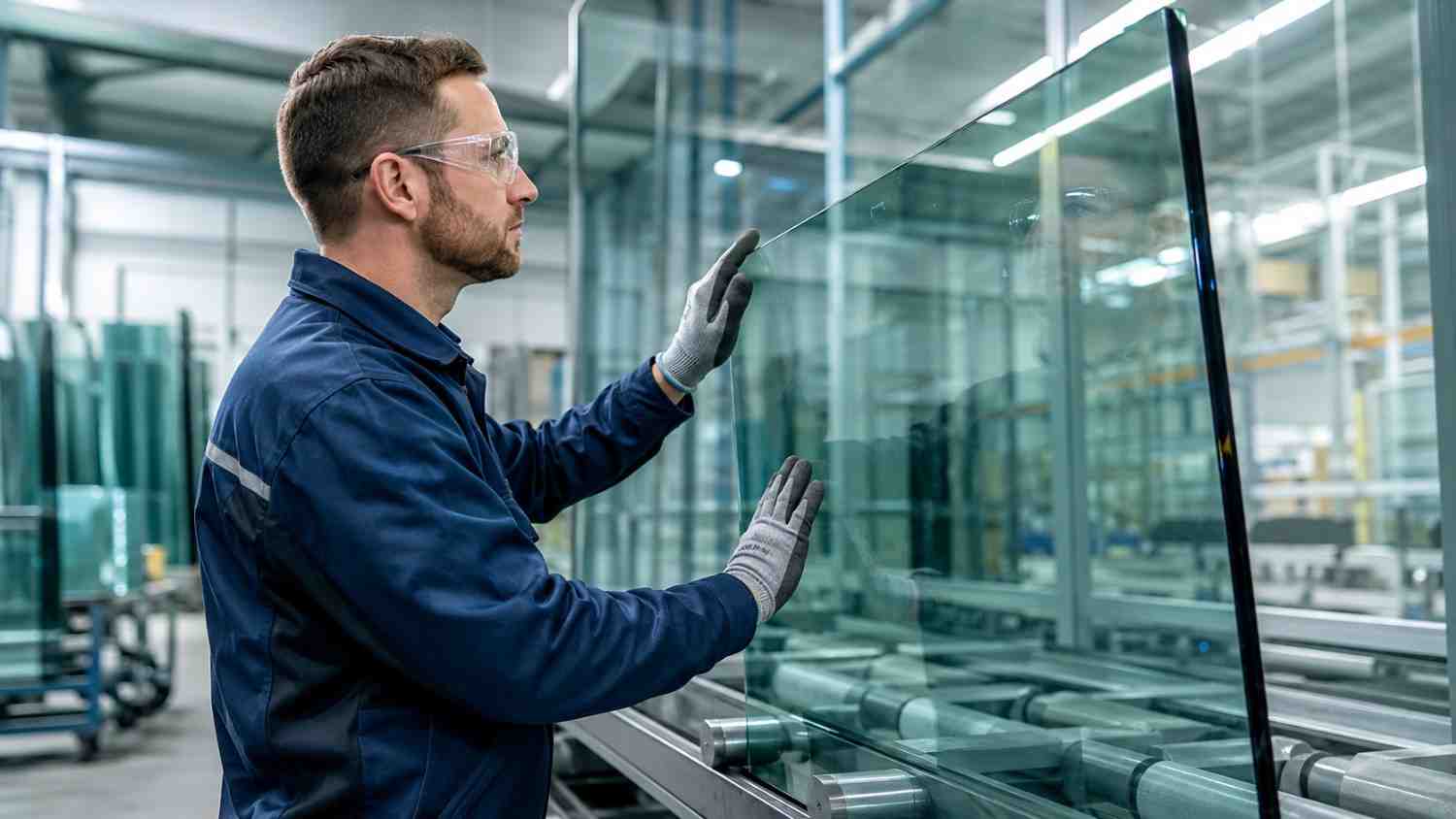
Glass used in modern construction is never installed without verification. Before it becomes part of façades, storefront systems, curtain walls, or interior installations, it undergoes controlled strength and performance testing.
These tests ensure the material can handle structural loads, environmental pressure, and real-world installation conditions found in commercial construction projects.
At Decor Glass Inc., a leading commercial glass manufacturer in Nashville, we evaluate every batch of glass for strength, consistency, and compliance before it enters construction supply chains.
Why is glass strength testing part of manufacturing
Glass behaves differently from most construction materials. It does not bend or deform before failure. Instead, it breaks when stress exceeds its capacity.
Because of this, every unit must be tested to confirm:
- Structural load resistance
- Safe fracture behavior
- Impact durability
- Long-term installation reliability
Inside glass strength testing systems
Flexural strength testing in structural glass systems
Flexural testing measures how much bending stress glass can withstand before breaking. This test reflects real conditions such as wind pressure on façades, curtain wall loads, and storefront stress.
As part of our production process, we use this test to verify that our tempered glass meets safety thresholds for architectural use.
Impact testing for safety performance
Impact testing evaluates how glass reacts when struck by force. It simulates:
- Human impact in public areas
- Construction handling conditions
- External debris or force
This is essential for glass used in entrances, doors, and high-traffic spaces.
Fragmentation testing in tempered glass production
After tempering, glass is tested for fragmentation behavior. It must break into small, blunt, controlled fragments.
As experienced suppliers of custom tempered glass in Nashville, we ensure each unit meets safety standards required for architectural installations.
Stress balance and heat soak testing
Glass strength depends heavily on internal stress created during tempering. Testing measures:
- Surface compression levels
- Edge stress distribution
- Uniformity across the sheet
Heat soak testing is also used to detect hidden inclusions that could lead to spontaneous breakage after installation.
Optical quality and reflective performance testing
Glass is not only tested for strength but also for visual quality in architectural applications. During inspection, we evaluate clarity, surface distortion, and coating consistency to ensure the glass meets required optical standards.
In applications where reflection control is important, anti-reflective glass is also evaluated for glare reduction and visibility performance before use in retail spaces, museums, showrooms, and architectural interiors.
Testing laminated and insulated glass systems
Different glass types require different performance validation.
Laminated glass testing
- Interlayer bonding strength
- Impact resistance after fracture
- Structural stability under load
Insulated glass unit testing
- Thermal efficiency
- Seal durability
- Gas retention performance
These systems are widely used in energy-efficient commercial buildings.
Interior architectural glass and mirror systems
Interior glass and mirror systems are inspected for optical distortion, surface defects, edge finish, and dimensional accuracy before installation. In commercial interiors, even minor inconsistencies can become highly visible under lighting and reflective conditions.
As an industrial and advertising glass manufacturer in Nashville, we evaluate architectural mirror systems for reflection consistency and fabrication accuracy before installation.
Quality control across the manufacturing line
In a controlled production environment, glass testing is part of the entire workflow:
- Raw material inspection before melting
- Furnace temperature monitoring
- Float line surface evaluation
- Post-processing stress verification
- Final inspection before packaging
Need tested glass for your next project?
If you are planning a commercial or architectural project, tested and specification-ready glass is essential for safety, performance, and construction timelines.
We work with contractors, architects, and developers to supply high-performance glass systems that meet real construction demands. Share your project details with us for technical evaluation and a quote.
Contact us to discuss your requirements.
Frequently Asked Questions
Glass strength testing ensures the material can safely withstand structural loads, impact, and environmental pressure before installation.
As experienced tempered glass manufacturers in Nashville, we test glass for flexural strength, impact resistance, fragmentation behavior, and internal stress balance.
Fragmentation testing confirms that tempered glass breaks into small, safer fragments instead of sharp shards after impact.
Commercial glass is inspected for clarity, optical distortion, coating consistency, and visible surface defects before installation.
We supply anti-reflective glass in Nashville for retail spaces, museums, showrooms, and architectural interiors where glare reduction and visibility are important.
Commercial Glass Manufacturers in Nashville test insulated glass units for thermal efficiency, seal durability, and gas retention performance.
As a custom mirror manufacturer in Nashville, we inspect mirror systems for surface quality, edge finish, dimensional accuracy, and reflective consistency.
Experienced manufacturers help ensure glass systems meet project specifications, safety standards, and construction timelines.