
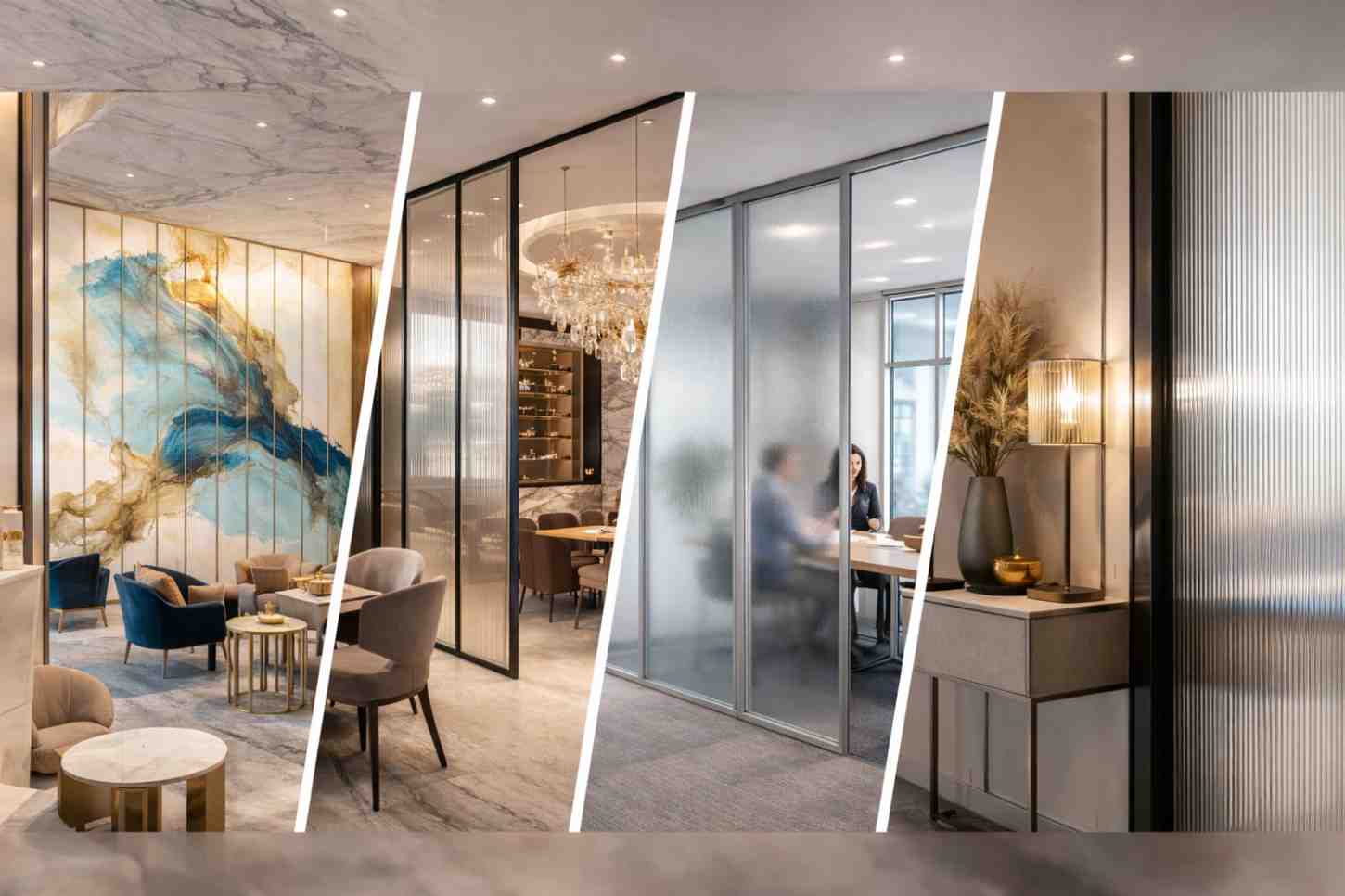
Decorative glass is doing more than just filling space now. In hospitality and commercial interiors, it’s being used to define brands, control privacy, and shape how a space feels.
On drawings, everything looks clean and aligned. But on real projects, the challenge is making sure that the idea actually shows up the same way on-site.
That’s where most teams start looking beyond design and work closely with a bulk decorative glass manufacturer like Décor Glass to ensure these trends are executed at scale.
Digital Printing Is Everywhere; Consistency Is the Real Trend
Digitally printed glass has become a go-to choice for branding, feature walls, and custom interiors. It gives architects full control over patterns, graphics, and finishes.
What’s changing now is the focus. It’s no longer just about what you can print, but how consistently it can be reproduced across dozens of panels.
In large lobbies or multi-site projects, even slight differences in color or alignment stand out. That’s why more teams are working with us, the leading bulk decorative glass manufacturer serving across the Southeast USA, to keep printing, processing, and finishing under one system.
Keep in mind: before finalizing designs, confirm how color matching, scaling, and panel alignment will be handled across the full production run.
The Rise of Large-Format Glass
Floor-to-ceiling and oversized glass panels are now common in hospitality and high-end commercial spaces. They create a seamless, modern look that smaller panels can’t achieve.
But larger panels come with real constraints. They are heavier, harder to handle, and more sensitive during transport and installation.
What’s changing is how early these factors are considered. Instead of adjusting later, teams are planning fabrication and installation from the start, often working directly with a bulk decorative glass manufacturer to make sure panels arrive ready to install.
What to do: confirm panel size limits, handling methods, and installation sequence early to avoid redesign or delays later.
Privacy and Acoustic Glass Are Becoming Standard
Open layouts are still popular, but they are no longer enough on their own. Offices, hotels, and public spaces now need better control over sound and privacy.
This has led to increased use of laminated, etched, and layered decorative glass that does more than just look good.
As a wholesale decorative glass supplier, Décor Glass sees more projects specifying performance along with design, especially in spaces where noise control directly affects how the space is used.
Best approach: define acoustic and privacy requirements at the specification stage, not after layouts are finalized.
Textured Glass Is Back, But Uniformity Is Critical
Fluted, ribbed, and patterned glass is widely used again, especially in hospitality interiors. It adds depth, diffuses light, and creates a softer visual feel.
But texture brings its own challenge. What looks subtle on a sample can look inconsistent across a full wall if the pattern is not uniform.
That’s why the focus is shifting toward manufacturing precision. Teams are paying closer attention to how textures are produced and repeated across panels.
This works better when full-size samples or mockups are approved instead of small swatches to verify consistency at scale.
Color and Layering in Focus
Tinted and layered decorative glass is being used to support branding and create a specific mood within a space.
But color is also where most inconsistencies show up. Differences between batches or slight variations in processing become visible once panels are installed together.
To avoid this, more projects are relying on wholesale decorative glass suppliers that control production from start to finish. This reduces variation and keeps the final result uniform.
Colors are best finalized early, with production kept within a single controlled batch wherever possible.
What These Trends Really Mean for Projects
Across all these trends, one thing is consistent. Decorative glass is no longer just about how it looks. It’s about how reliably it can be delivered and installed without issues.
That’s why more architects and contractors are involving a bulk decorative glass manufacturer early in the project. It helps align design, production, and installation before problems show up on site.
At Décor Glass, that’s where most of the focus goes, making sure what’s designed is exactly what gets produced and installed, without variation.
Final Thought
Design trends in decorative glass are evolving, but the biggest shift is happening behind the scenes. It’s not just about new finishes or patterns anymore. It’s about making sure those designs can be repeated, scaled, and installed without compromise. When that part is handled right, everything else falls into place.