
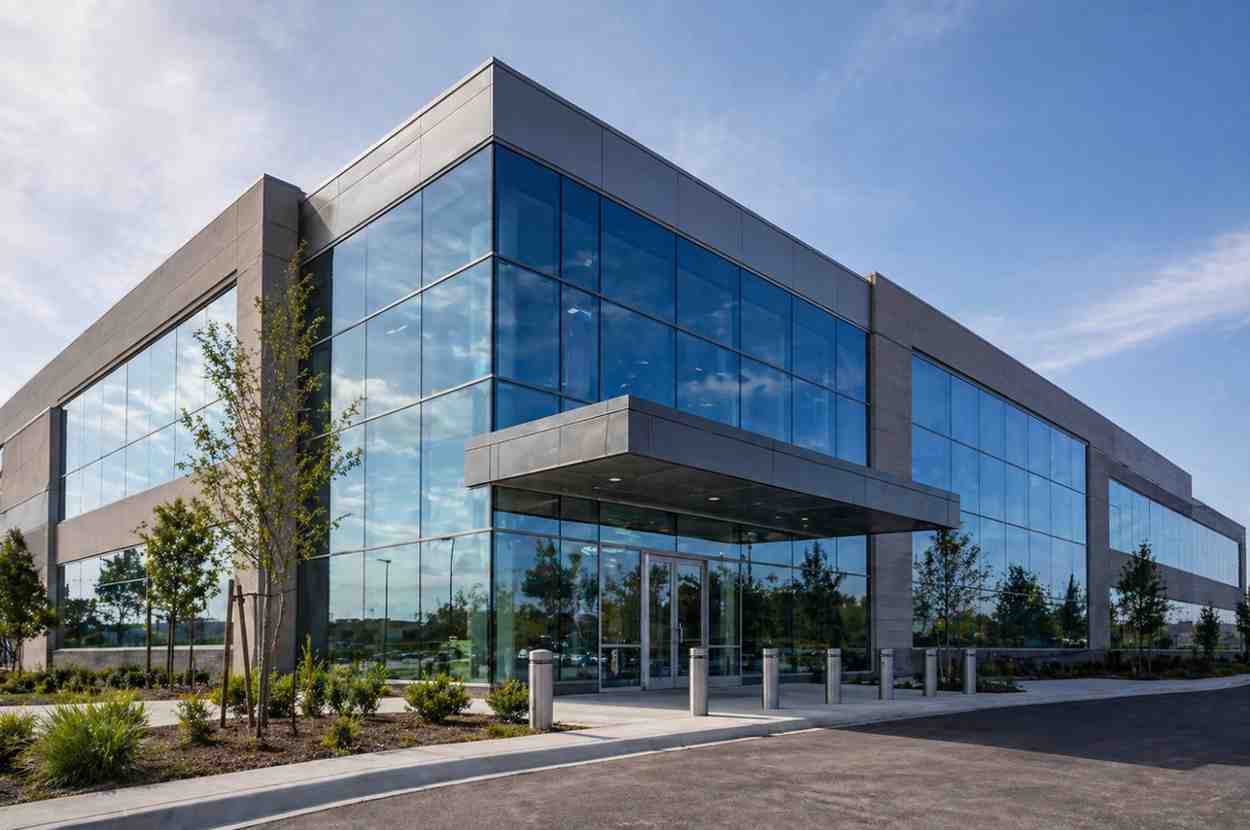
Architectural glass is now a core requirement in commercial construction, not just a design choice. In most modern projects, it is specified because it directly impacts energy performance, safety compliance, sound control, and overall facade design.
For large-scale developments, architects and contractors work with us as their tempered glass manufacturer in Chicago to ensure the glazing system meets both design intent and building code requirements.
Below are the six key features that define architectural glass in modern commercial use.
Key features of architectural glass
1. Facade performance and architectural appearance
Architectural glass is a primary element in modern building envelopes.
- Enables curtain wall and structural glazing systems
- Creates a continuous, high-clarity exterior surface
- Supports modern commercial and institutional architecture
- Improves visual consistency across large façades
In commercial projects, glass is often selected as part of the building identity, not added later as a finish.
2. Daylighting performance and interior quality
Glass is specified in commercial buildings to control how natural light behaves inside the structure.
- Maximizes daylight penetration in deep floor plates
- Reduces artificial lighting dependency during operating hours
- Improves occupant comfort and visual environment
- Supports productivity in office and retail spaces
As an insulated glass manufacturer in Chicago, we supply high-performance glazing that balances daylight with solar heat control.
3. Thermal performance and energy compliance
Energy performance is a baseline requirement in commercial construction, and glass plays a major role in it.
- Controls solar heat gain through coatings and coatings systems
- Reduces heating and cooling load on HVAC systems
- Maintains stable indoor temperatures across seasons
- Helps meet commercial energy code requirements
Insulated glass units (IGUs) are typically specified for office towers, retail centers, and institutional buildings where energy modeling is part of approval.
4. Safety glazing and structural reliability
Safety performance is non-negotiable in commercial glass applications.
| Glass type | Performance behavior | Application role |
| Tempered glass | High impact resistance | Breaks into small, safe fragments |
| Laminated glass | Retains integrity after breakage | Prevents falling glass and adds security with an option for a high-strength interlayer designed to resist forced entry and delay break-in attempts |
- Used in facades, entrances, and interior partitions
- Required in impact-prone and public areas
- Specified based on building code and occupancy type
For large projects, procurement is often managed through us as a bulk laminated glass supplier in Chicago to ensure consistent quality across multiple installation phases.
5. Acoustic control in urban environments
Sound performance is a major design consideration in dense commercial zones.
- Reduces external traffic and street noise infiltration
- Improves acoustic privacy in offices and meeting rooms
- Enhances occupant comfort in hospitality and healthcare spaces
- Supports better speech clarity in enclosed environments
Laminated and insulated glass configurations are typically engineered based on required STC ratings for the project.
6. Design flexibility and engineered customization
Architectural glass is not a standard product. It is engineered for each project requirement.
- Available in clear, tinted, frosted, reflective, ceramic-frit, and bird-safe glass options
- Can be fabricated in oversized, curved, or irregular shapes
- Integrates with structural glazing and unitized curtain wall systems
- Supports branding through decorative and printed glass applications
For specialized applications, projects require fire-rated glass for compartmentalization systems or bullet-resistant glass for secure, controlled-access environments, and we at Decor Glass Inc. supply these solutions as a trusted manufacturer in Chicago, based on project requirements.
How architectural glass is actually selected in commercial projects
In real construction workflows, glass selection is driven by performance specifications, not aesthetics alone. Architects and consultants define requirements based on:
- Energy modeling and facade orientation
- Occupancy type and safety classification
- Acoustic targets for interior spaces
- Fire and life safety code requirements
- Budget and lifecycle performance expectations
This is why coordination with a tempered glass manufacturer in Chicago becomes part of the technical approval process, not just procurement.
What’s the Right Glass Strategy for Your Next Commercial Build?
For commercial developments, glazing decisions directly impact performance, compliance approvals, and long-term operational efficiency.
At Decor Glass Inc., we work closely with contractors, architects, and developers to deliver engineered glass systems, including tempered, laminated, insulated, fire-rated, and bullet-resistant solutions tailored to project needs.
What you can do next:
- Request technical specifications for your project design today
- Get bulk supply support for ongoing or upcoming commercial builds
- Connect immediately with the most trusted tempered glass manufacturer in Chicago for consistent, code-compliant delivery
Contact us now to share your requirements and get a tailored glass solution for your project before planning moves forward.